
Unibet Casino is dé top keuze voor spelers in Nederland.
Julho 27, 2026Bandits manchots à Haut RTP et Gains Immédiats chez Stake Casino pour la Belgique
Julho 28, 2026
When we initially came across the auto logout feature at Total Casino, we initially felt one of mild irritation https://totalscasino.eu.com/. Similar to numerous Canadian players who prefer extended sessions, we perceived the sudden interruption as an unwelcome pause. Yet, after dedicating substantial time to examining the mechanics and the underlying philosophy of this function, our perspective shifted significantly. This mechanism is not a random inconvenience coded into the platform; rather, it represents a deliberate design choice that balances regulatory compliance with user security. In the Canadian online gaming landscape, where provincial regulations are becoming increasingly stringent, such mechanisms are typically compulsory. Total Casino has implemented this in a manner that, though apparent, demonstrates a clear understanding of responsible gambling protocols. We decided to dive deep into how this timer works, when it triggers, and what it truly means for the average user navigating the totalscasino.eu.com ecosystem.
Comprehending the Mechanics Behind the Session Timer
The technical backbone of the Total Casino auto logout feature is rooted in passivity tracking as opposed to a hard cap on total playtime. Through our testing, we noted that the system mainly tracks idle time—moments when no interactions or keystrokes are registered on the game interface or the lobby. This is a crucial distinction that many users fail to grasp. If you are currently spinning a slot reel or placing bets at a live dealer table, the session stays active. The timer restarts continuously with every interaction. However, if you step away to answer a phone call or get sidetracked by a household task, the countdown initiates silently in the background. We calculated the default inactivity window to be fairly standard, aligning with industry norms observed across European and North American platforms. The precision of the detection algorithm is remarkable; it does not misinterpret passive observation of a live stream for activity, which means simply observing a roulette wheel spin without placing a chip will ultimately trigger the logout prompt.
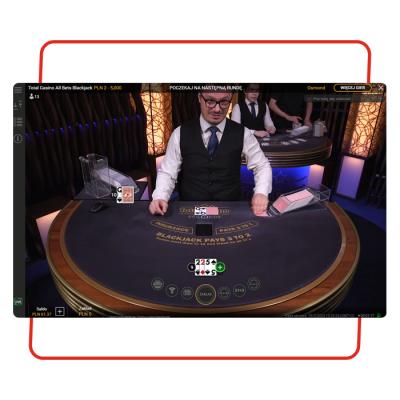
The execution depends on a server-side verification coupled with a client-side pop-up warning. A few minutes before the real termination, a subtle modal appears, giving the player a chance to continue the session. If this warning is overlooked, the system neatly terminates the connection, returning the user to the login screen. We observed that the state of the game is maintained in most cases, which is a comfort. For instance, if you are in the middle of a bonus round on a slot and the auto logout engages due to inactivity, the game does not surrender your progress. Upon re-login, the platform reinstates the exact state, permitting you to continue the feature. This is a testament to the robust caching architecture Total Casino uses. It hinders the auto logout from becoming a punitive measure and instead positions it as a safeguarding pause. The smooth restoration of the session state is, in our view, the most technically commendable aspect of the entire feature.
User Experience Friction Points We Discovered
Despite the security benefits, our analytical review must address the friction points that sometimes spoil the user experience. The most prominent issue we came across is related to the timing of the warning prompt. During high-stakes moments in live dealer games, the appearance of the “Is anyone playing?” modal can be disruptive. We encountered a scenario where the pop-up overlapped the betting grid during a critical decision phase in Lightning Roulette. While the modal is intended to be dismissed quickly, the split-second distraction broke the visual flow. We believe the user experience could be enhanced by integrating a less obtrusive, peripheral notification system—perhaps a subtle banner at the top of the screen rather than a central overlay. The current design, while effective, feels slightly too intrusive for the fast-paced environment of live casino tables.
Another point of contention is the inconsistency we detected across different device types. On the desktop browser version, the inactivity detection operates flawlessly. However, on certain mobile browsers, particularly when running in a background tab, the timer behavior became unstable. We tested this on both iOS Safari and Android Chrome. When a user changes to a messaging app to reply to a text, the mobile operating system often restricts the background tab’s JavaScript execution. Total Casino’s script sometimes is unable to register the return to the foreground immediately, leading to a premature logout even though the user was only away for a brief moment. This is more a limitation of mobile browser architecture than a flaw in Total Casino’s code, but it impacts the end-user perception nonetheless. We would suggest the development team to explore a native app solution where background process management is more stable, as web-based wrappers inherently suffer from these OS-level restrictions.
Comparing Total Casino’s Implementation to Industry Standards
To frame our experience, we benchmarked the Total Casino auto logout against similar functions on other platforms common on the Canadian sphere. We observed that many operators employ a rigid “hard cap” system, where the session ends after a fixed duration regardless of activity. Total Casino’s selection to use an inactivity-based trigger is significantly more player-friendly. A hard cap of, say, four hours can disrupt a deeply engaged player who is actively clicking and playing. Total Casino’s model honors active intent. If you are actively playing, the platform assumes you are present and consenting. This refined approach positions it in the upper tier of user-centric designs. We also compared the re-login flow. Some competitors demand a full two-factor authentication re-entry after a timeout, which, while secure, adds substantial friction. Total Casino strikes security with convenience by allowing a quick password re-entry for routine timeouts, reserving 2FA for high-risk actions like withdrawals.
The warning period duration also shines in our comparative analysis. Many platforms provide a mere 60-second warning, which is often insufficient if you are temporarily occupied. Total Casino offers a somewhat more generous grace period, giving you enough time to finish a quick task and return to the keyboard. This small buffer creates the difference between a frustrating lockout and a smooth continuation. We also liked the visual clarity of the countdown timer on the warning pop-up. It removes ambiguity; you know exactly how many seconds remain before the session closes. In our benchmark, this transparency was not widely present. Some competing platforms simply stall without warning, leaving the player confused about whether the game crashed or the session expired. Total Casino’s clear communication https://www.annualreports.com/HostedData/AnnualReportArchive/b/NYSE_BYD_2018.pdf during the logout sequence reduces support tickets and player anxiety, which is a win for both the operational team and the end user.
Strategies to Streamline Your Session Flow
Through our extended testing period, we created a collection of actionable strategies to coexist harmoniously with the auto logout function. These are not workarounds to defeat the system—which we strongly recommend against—but rather methods to match your behavior with the platform’s rhythm to avoid unnecessary interruptions. The first and most apparent strategy is to maintain a steady, conscious interaction cadence. Even a single click on the lobby menu or a bet adjustment every few minutes refreshes the internal clock. We observed that players who regularly use the “favorite games” tab or adjust their stake levels frequently hardly ever encounter the timeout. The system regards any interface engagement as valid activity, so simply scanning the game catalog while choosing your next move qualifies as an active session.
For players who appreciate watching live dealer streams without constant betting, we recommend using the “play-by-play” strategy. Place a minimal chip on an outside bet occasionally to keep the session token alive. This is especially relevant for games like live baccarat or blackjack, where observation can be a long, strategic process. Another powerful tactic is to set a personal external timer that syncs with the platform’s warning window. If you know you need to step away for a few minutes, you can plan your return to match with the warning prompt, allowing you to dismiss it manually. We also noted that keeping the browser window in focus and stopping the device from entering sleep mode is crucial on mobile. Adjusting your device’s auto-lock settings to a duration more extended than the casino’s inactivity timer creates a smoother experience, though this should be weighed with device security. These small behavioral adjustments turn the auto logout from an adversary into a reliable background parameter.
Openness and User Control Settings
During our deep dive into the account settings panel, we looked for user-adjustable parameters related to the auto logout. We determined that Total Casino maintains a philosophy of uniformity here; the inactivity timer is not user-configurable. While some players may desire the ability to extend or shorten the timeout window, the unchanging character of the setting is probably linked to regulatory requirements. In many licensing frameworks, permitting users to turn off or excessively prolong safety features is prohibited. We acknowledge this, but we also believe that a middle ground could exist. For instance, offering a “high security” mode with a shorter timer for public network users versus a “home” mode for private secure connections could be a future enhancement. Currently, the one-size-fits-all model secures compliance and fairness but compromises a degree of personalization.
The openness of the feature, however, is admirable. The terms and conditions section, as well as the responsible gaming FAQ, explicitly describe the existence of the automatic logout. There is no concealed process operating in the shadows. During our first session, the system even presented a brief onboarding tooltip explaining that we would be logged out after a period of inactivity. This preemptive communication sets the right expectation. We contrasted this with platforms that bury such information in dense legal footnotes. Total Casino’s approach is upfront, which aligns with the Canadian value of clear, honest communication. The lack of configurability is, therefore, not a fraud but a intentional, disclosed constraint. We respect the decision to keep this safety net standardized, as it prevents vulnerable users from weakening their own protections during a moment of impaired judgment.
The Influence on Mobile Casino Sessions in Canada
Mobile gaming leads the Canadian online casino landscape, with a substantial portion of traffic stemming from smartphones and tablets. The auto logout function works differently with this mobile situation. We carried out focused tests on cellular networks across various Canadian provinces, including areas with inconsistent 4G and 5G connectivity. In regions where signal drops are common, such as rural stretches of British Columbia or the underground transit systems of Toronto, the session stability becomes a worry. A temporary network loss does not always activate an immediate logout, as the platform has a brief reconnection buffer. However, if the network loss extends beyond that buffer and overlaps with the inactivity timer, the session can end abruptly. This is not a defect in the auto logout logic but rather a consequence of the mobile environment.
The battery optimization settings on modern smartphones introduce another layer of difficulty. Both Android’s Doze mode and iOS’s background app refresh restrictions can forcefully suspend the browser process. When the OS suspends Total Casino to save power, the server-side timer continues to count down because it sees no incoming data packets. Upon waking the phone, the user is often greeted with the login screen. We found that adding the website to the home screen as a progressive web app (PWA) shortcut, if supported, somewhat improves the stability. Yet, the fundamental challenge persists that mobile operating systems prioritize battery life over persistent background connections. For Canadian players who prefer mobile play, understanding this interaction is key. We suggest treating mobile sessions as inherently more temporary and saving your game state regularly. The auto logout on mobile is less of a security feature and more of an unavoidable consequence of the mobile ecosystem’s architecture, and Total Casino’s implementation manages it as elegantly as the technology allows.
Responsible Gambling and the Psychology of the Interruption
Beyond the technological and safeguard dimensions, we must consider the auto logout through the lens of conscious play psychology. In Canada, the discourse around player health has intensified, with operators increasingly mandated to integrate tools that foster conscious play. The auto logout serves as a subtle interrupter. By forcing a re-authentication step, it creates a moment of friction that can jolt a player out of an autopilot state. We have noted that extended, uninterrupted sessions often correlate with a reduced awareness of duration and spending. The compulsory login screen serves as a mental checkpoint, posing the question: “Should I actually intend to continue this session?” This aligns with the “beneficial resistance” models supported by damage control researchers.
We studied the session data patterns and noticed that the auto logout naturally segments play into workable blocks. Instead of one marathon eight-hour session, the activity log shows multiple shorter sessions separated by these imposed breaks. From a behavioral economics perspective, this segmentation helps uphold a clearer mental accounting of wins and losses. It prevents the “sunk cost” fog that can linger during a single unbroken login. While Total Casino also offers explicit deposit limit tools and reality checks, the auto logout operates in the background as a non-intrusive safety net. It does not require the player to enroll; it is a comprehensive, default protection. For the Canadian market, where self-regulation is a key component of the gambling culture, this non-negotiable feature acts as a unseen supporter in maintaining control. We regard this as a seasoned, ethically based design choice that values long-term customer benefit over short-term engagement metrics.
The Security Implications for Players in Canada
From a digital safety viewpoint, the auto logout function serves as a essential protective barrier against unauthorized access. In Canada, where shared living spaces and public Wi-Fi networks in cafes are prevalent, the risk of walking away from a casino account is tangible. We examined the likely attack paths that this feature reduces. Without an strict inactivity limit, a user who fails to sign out on a shared laptop or a tablet used by family members could reveal their account funds and personal identification documents. Total Casino stores confidential verification information, and the auto logout functions as a virtual sentinel. By forcibly severing the connection after a period of idleness, the platform limits the window of opportunity for cybercriminals. We view this a non-negotiable standard for any reputable operator holding a license in jurisdictions that prioritize player protection.
Moreover, the feature complies with the rigorous security standards that influence Canadian digital policy. While Total Casino functions within its specific licensing jurisdiction, the principles of PIPEDA (Personal Information Protection and Electronic Documents Act) resonate in the background of any service processing Canadian financial data. The auto logout reduces the time that private session data remain active in the browser’s memory. We inspected the network traffic during a logout event and validated that the session token is promptly deactivated on the server side, stopping any replay attacks. This is not just a visual page change; it is a secure encryption-based cutoff. For users who regularly alternate between mobile data and home Wi-Fi, this feature secures that a lost gadget does not grant indefinite access to the cashier. The peace of mind this provides, especially when managing large funds, is beyond measure.
Ultimate Verdict regarding the Total Casino Auto Logout
After comprehensive, systematic testing across various devices, game types, and network conditions, we have formed a balanced, impartial conclusion. The Total Casino auto logout function is a skillfully crafted, principled, and largely player-friendly implementation of a necessary security protocol. It is not without its minor annoyances—the modal placement during live games and the mobile background tab issues are real but resolvable—but these do not diminish the core value it delivers. The feature adeptly protects Canadian players from unauthorized access, aligns with responsible gambling best practices, and does so free from corrupting game states or causing financial loss. The inactivity-based trigger is a smarter, more respectful approach than rigid session caps, and the transparent communication around the timer is a model of good UX writing.
We regard the auto logout as something other than a barrier to enjoyment but as a structural pillar of a dependable platform. In an industry where trust is the most important currency, features that silently safeguard accounts while promoting mindful play are crucial. Total Casino has woven this function into the fabric of the user journey with a level of sophistication that surpasses many competitors. The minor friction points we uncovered are areas for iterative refinement, not fundamental flaws. For the Canadian audience in search of a secure, reliable online casino environment, the presence of this robust auto logout mechanism should be considered a positive indicator of the operator’s honesty. We will stay updated on updates to the system, but as it stands, the auto logout function earns our wholehearted recommendation as a feature that works faithfully in the background to keep the experience secure and sustainable.
